
Fools and Crusaders
The attack on Iran is the latest chapter in a long history of imperial interference, now supercharged by the delusions of warmakers who mistake domination for destiny.
Rev. J. Mark Davidson
3/12/20264 min read
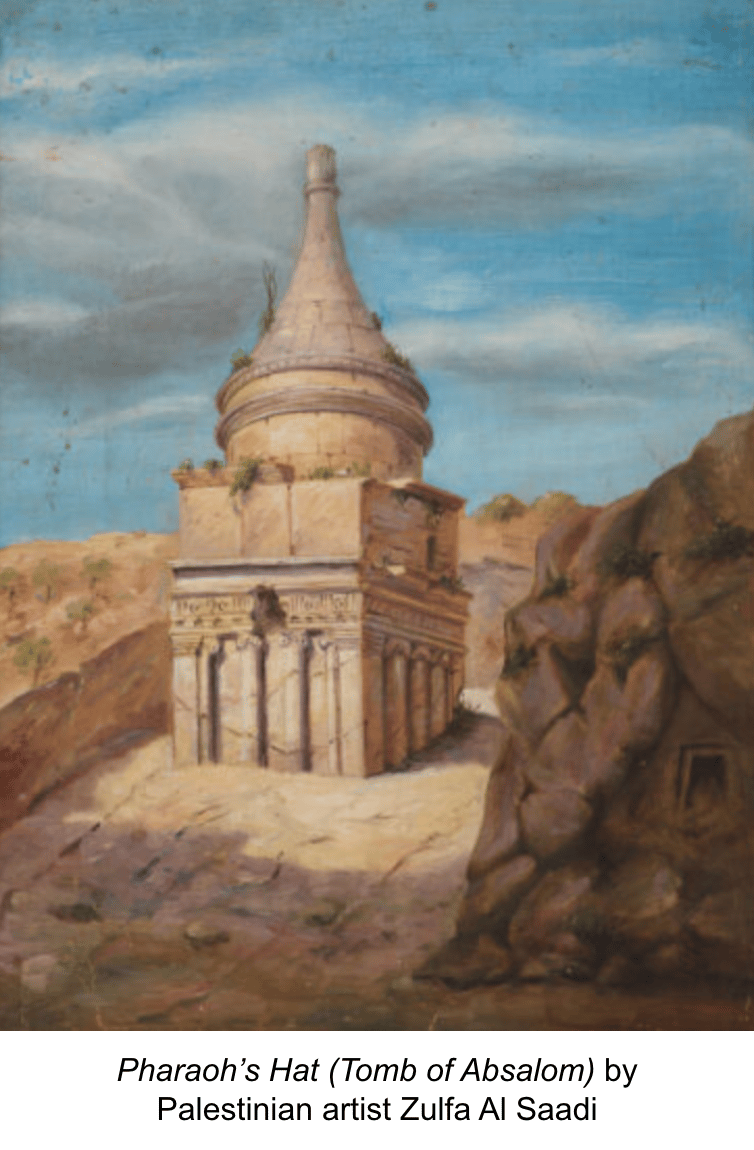
On the 13th day of this catastrophic war on Iran, we reflect on the historical context, and what the future portends.
A snapshot of US-Iran relations over the last 7 decades.
In 1950, Mohammad Mosaddegh, a western-educated lawyer, author, and political leader, was democratically elected as Premier of Iran. In 1951, the Mosaddegh government nationalized its oil production, seizing control of western oil companies, predominantly the Anglo-Iranian Oil Company, now British Petroleum (BP). In 1953, a CIA-backed coup toppled the Mosaddegh government and installed the Shah, a pro-western monarch, who reversed the nationalization of Iran’s oil. Western oil companies like Shell and Exxon Mobil operated freely in Iran during this period. The Shah, who referred to himself as “King of Kings,” ruled Iran with an iron fist. His SAVAK secret police, trained by the CIA, were notorious for repressing and torturing dissenters. The Shah was deposed in 1979 during the Iranian Revolution, which replaced the monarchy with an Islamic republic. In 1979, Iran re-nationalized its oil production. Many Iranians deeply resent American interference in their domestic affairs, especially overthrowing their democratically-elected leader in 1953, plundering their oil, and supporting the Shah’s repressive rule. Anti-American sentiment increased when severe American sanctions isolated and weakened the Iranian economy. Additionally, the Trump-ordered assassination of Qasem Soleimani, a top military commander in 2020, prompted Iranian missile strikes against US bases in the region, wounding 110 American troops. While there are other factors in play, the historical context shows the enduring importance of oil and who controls it. Western economic and political interests have long wanted to control Iran’s oil reserves, the third largest in the world, and reap great wealth. Meanwhile, the Iranian people assert their right to use Iranian natural resources for the wealth of their own people, and to determine their own form of government. In short, the United States and Israel do not have the right to interfere in the domestic affairs of the country of Iran. There is no question that Islamic fundamentalism is very unpopular, especially its repression of women and its brutal crackdown on protesters. That said, this misbegotten war is in no way “a regime change war to liberate Iranian women.” As even the fiercest critics of the Islamic Republic, many of them feminists, have said, “U.S. and Israel, CIA and Mossad, get out. It is our responsibility to change our government, not outside forces.”
The illusion of regime change
American and Israeli airpower, coupled with Trumpian lies and propaganda, were supposed to turn the Iranian people against their government. But devastating airstrikes, assassinations of their leaders, murdering 165 schoolgirls, raining oil on Tehran, don’t motivate the Iranians to “take it out” on the mullahs. Instead, it unifies them against “The Great Satan.” It awakens decades of deep anti-American sentiment. There is much talk in Washington about regime change in Iran. But they fail to grasp that Iran’s revolutionary government is half-a-century-old, and has been structured to withstand attempts to overthrow it. No doubt about it, the combined air power of Israel and the United States can rain down terrible destruction on Iran, as we have seen. But this blind application of American/Israeli military power is bound to backfire, just as it did in the United States’ reckless interventions in Afghanistan, Iraq, and Libya. American and Israeli hawks have badly underestimated the ferocious resistance they will face by infuriating and humiliating 90 million Iranians. The region of Iran has been inhabited for 100,000 years, and the Persian civilization is over 10,000 years old. When you awaken a proud people’s existential fear and fury, expect to reap the whirlwind.
Crusader Mentality (Defeated)
Mike Prysner, Executive Director of the Center on Conscience and War, reports that soldiers in over 40 U.S. military units have complained that their commanders are spreading Christian Nationalist talking points: the war in Iran is “the spark of Armageddon,” that Donald Trump is “anointed by God” to light the fuse that will bring about “the mother of all battles” and force the Second Coming of Christ, that this is “a Christian holy war” against the Muslims, etc. This is reminiscent of Israeli Prime Minister Benjamin Netanyahu exhorting his Jewish troops to consider the Palestinians as “Amalek”, the sworn biblical enemy of Israel, and that they must wage “holy war” against them and destroy everything. Christian Nationalism is a dangerous distortion of Christian ethics. It is antithetical to the life and teachings of Jesus, who modeled nonviolence and exhorted us to love our enemies, not obliterate them. It is also a misreading of the Bible references to Armageddon. It has more to do with dispensationalism, a heretical theology, and the “Left Behind” books, than what it actually says in the Book of Revelation. The Book of Revelation should not be interpreted literally or as a coded prophecy. It is a symbolic vision about the life of faith in the midst of Empire. There actually is no battle in the Book of Revelation. The nations gather. The stage is set. But when we expect a final and epic clash of armies, something else astonishing happens. Christ appears as a rider on a white horse. His robe is dripping with his own blood, not his enemies. The armies just stand there. Then Christ speaks. The Beast and the kings of the earth are defeated, not through violent warfare, but by the word that proceeds from the Lamb of God. In other words, Christ defeats the crusader mentality through the power of love.